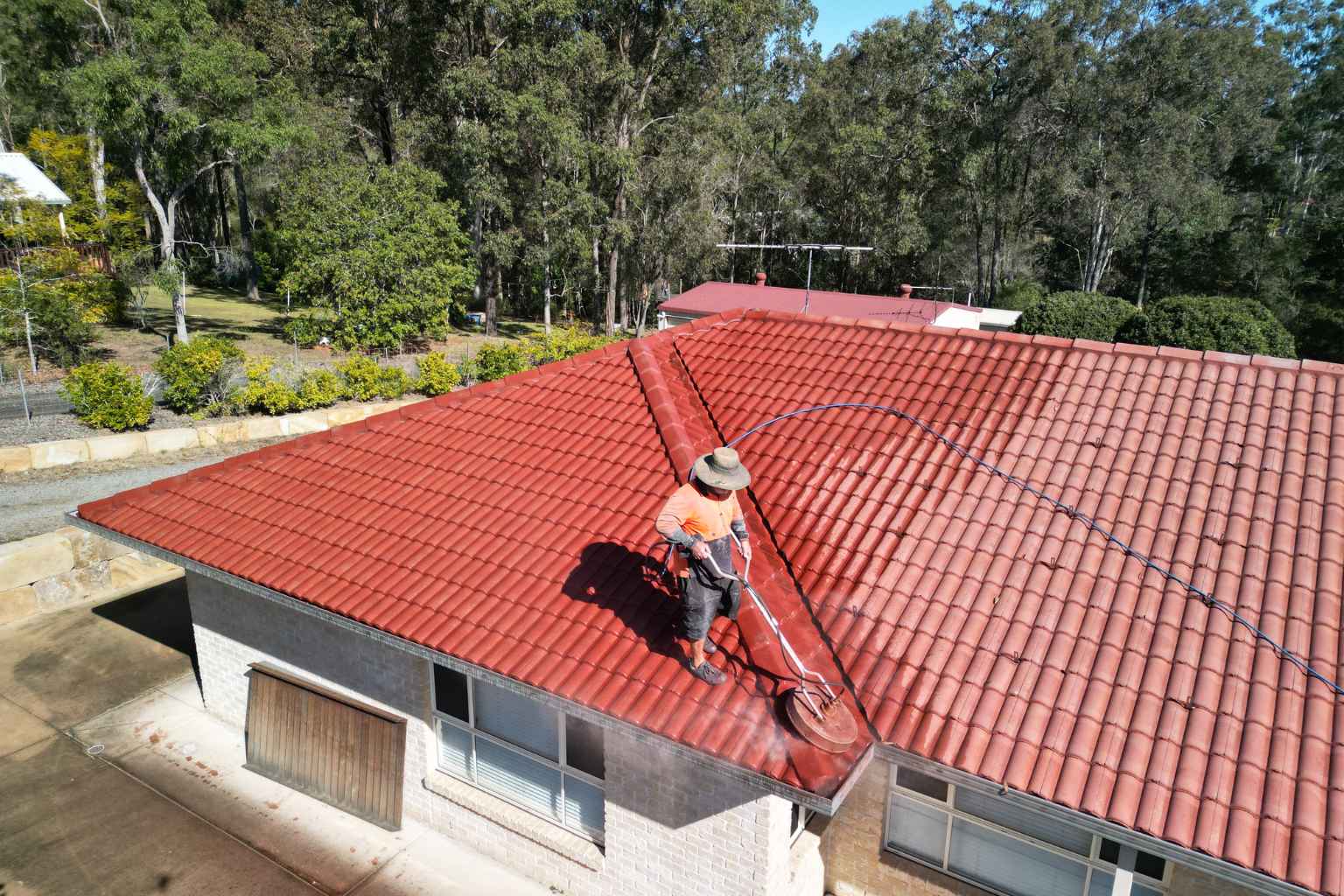
Why Roof Cleaning Matters for North Brisbane Homes
A roof is constantly exposed to the elements, and North Brisbane’s humid summers, heavy rainfall, strong sunlight and surrounding vegetation can gradually leave roofing surfaces covered in dirt, moss, lichen and other organic growth.
Some roofs simply begin to look tired, while others develop heavy staining that can make it difficult to assess the condition of the surface underneath.
Professional roof cleaning in North Brisbane can help restore a cleaner appearance, remove accumulated contaminants and provide a clearer view of the roof’s overall condition.
It is also an important preparation stage before many roof restoration and painting projects. Coatings should not be applied over dirt, loose material or organic growth, which means thorough cleaning is often one of the first steps in achieving a quality finished result.
Learn more about our professional roof cleaning services in North Brisbane.
What Builds Up on North Brisbane Roofs?
The type and amount of contamination will vary considerably between properties.
A roof surrounded by mature trees may behave very differently from one that receives direct sunlight throughout most of the day.
Common forms of build-up include:
- Moss
- Lichen
- Algae
- Mould and mildew
- General dirt and dust
- Bird droppings
- Leaves and organic debris
- Pollution and airborne contaminants
- Loose or deteriorated coating material
Some of these issues are primarily cosmetic, while others can conceal deterioration or retain moisture against sections of the roof.
Moss and Lichen on Tiled Roofs
Moss and lichen commonly develop on shaded or damp areas of tiled roofing.
Growth may be particularly noticeable:
- Beneath overhanging trees
- On sections receiving limited sunlight
- Around ridge capping
- On older weathered surfaces
- In areas where moisture remains for longer after rain
Lichen can bond tightly to a roof surface, which means aggressive scraping or excessive water pressure may damage older materials.
The correct cleaning method should therefore be selected according to the roof’s condition rather than simply using the highest available pressure.
Algae and Dark Roof Staining
Dark streaks or patches across a roof may be caused by algae, mould, dirt or a combination of contaminants.
These marks can make an otherwise well-maintained property appear older and less cared for.
Cleaning can improve the appearance considerably, but dark staining should not automatically be assumed to be dirt.
Older coatings may also fade or deteriorate unevenly, and cleaning cannot restore a coating that has reached the end of its useful life.
Where the underlying surface remains suitable, further preparation and roof painting in North Brisbane may be considered after cleaning.
Leaves and Organic Debris
Trees are a major contributor to roof debris across many North Brisbane suburbs.
Leaves, seed pods, twigs and other material may collect:
- In roof valleys
- Behind roof penetrations
- Around solar panels
- At roof-to-wall junctions
- On flatter roof sections
Accumulated material can retain moisture and make it difficult to properly inspect the areas underneath.
Large branches may also damage roofing materials during storms.
Keeping nearby trees appropriately maintained can help reduce the amount of debris reaching the roof.
Bird Droppings and Environmental Contaminants
Bird droppings, airborne dust and general environmental contamination can gradually affect the appearance of both tile and metal roofing.
The impact depends on:
- Roof material
- Existing coating condition
- Exposure
- Length of time contamination remains
- Local surroundings
Regular observation from ground level can help homeowners identify significant build-up before it becomes difficult to remove.
Signs Your Roof May Benefit From Cleaning
Roof cleaning does not need to be carried out according to one fixed schedule.
Instead, homeowners can watch for visible changes such as:
- Moss or lichen growth
- Dark streaks
- Uneven roof colour
- Heavy surface dirt
- Organic build-up
- Weathered-looking tiles
- Dirt around ridge capping
- Debris collecting on roof sections
- A roof that looks substantially different from its original finish
- Preparation being required before restoration or painting
The roof should ideally be inspected before cleaning begins, particularly if it is older or has visible damage.
Why Inspect the Roof Before Cleaning?
Cleaning may appear straightforward, but an ageing roof can contain weaknesses that are not immediately obvious.
Before work begins, the roof should be checked for issues such as:
- Loose ridge capping
- Deteriorated pointing
- Visible leaks
- Corrosion
- Loose metal roof fixings
- Damaged flashings
- Failed sealants
- Fragile roof surfaces
- Previous repair work
- Deteriorated coatings
Cleaning a vulnerable area without recognising the damage first may make an existing issue worse.
For example, excessive pressure around loose ridge capping or failed flashing may force water into areas that would otherwise remain relatively protected.
Roof Cleaning Methods Explained
There is no single roof-cleaning method that suits every property.
The right approach depends on:
- Roof material
- Surface condition
- Existing coatings
- Amount of organic growth
- Roof age
- Accessibility
- Surrounding property features
Two commonly discussed methods are pressure cleaning and soft washing.
Pressure Cleaning
Pressure cleaning uses controlled water pressure to remove dirt, loose material and surface build-up.
It may be appropriate on suitable roof surfaces where the material and condition can tolerate it.
Professional pressure cleaning requires careful control of:
- Water pressure
- Nozzle type
- Working distance
- Cleaning angle
- Direction of water flow
Incorrect technique may:
- Damage fragile surfaces
- Strip serviceable coatings
- Force water beneath roofing materials
- Disturb loose components
- Damage seals
- Spread debris around the property
This is why simply hiring a pressure cleaner and applying maximum pressure is not an appropriate roof-cleaning method.
Soft Washing
Soft washing uses lower water pressure together with suitable cleaning treatments.
It may be appropriate where high pressure could damage the roofing surface or existing finish.
Depending on the product and contamination, soft washing may help treat:
- Moss
- Lichen
- Algae
- Mould
- Organic staining
The cleaning treatment should always be compatible with the roofing material and used in accordance with manufacturer instructions.
Particular care is needed around gardens, rainwater systems, pets and neighbouring properties.
Chemical Roof Treatments
Specialised treatments may sometimes be used to help control organic growth.
This should not involve randomly applying strong household chemicals to the roof.
A professional should consider:
- Product compatibility
- Dilution
- Application method
- Runoff
- Surrounding plants
- Painted surfaces
- Rainwater collection
- Nearby pools
- Manufacturer directions
The strongest chemical is not necessarily the best product for the job.
Tile Roof Cleaning in North Brisbane
Tile roofing is common throughout North Brisbane, but concrete and terracotta tiles have different characteristics.
Concrete Tile Roofs
Suitable concrete tiles may respond well to professional cleaning where the surface is in reasonable condition.
Before cleaning, the contractor should check:
- Ridge capping
- Pointing
- Existing coatings
- Visible deterioration
- Roof penetrations
- Areas showing signs of leakage
Cleaning often reveals the true colour and condition of the tiles underneath accumulated dirt and organic growth.
It can also highlight areas that require further attention.
Terracotta Tile Roofs
Terracotta roofing may require a more cautious cleaning approach depending on its age, finish and condition.
Aggressive cleaning can potentially damage fragile or deteriorated tiles.
Not every terracotta roof should subsequently be painted or coated either, so the roof material needs to be properly identified before further restoration work is recommended.
Metal Roof Cleaning in North Brisbane
Metal roofs also benefit from appropriate cleaning, particularly before repainting or restoration.
However, metal roofing should first be assessed for:
- Rust
- Loose screws
- Failed washers
- Deteriorated sealants
- Damaged sheets
- Coating failure
- Flashing issues
- Corrosion around roof penetrations
Cleaning may make corrosion more visible, but it does not repair it.
Where problems are found, the underlying issue should be addressed before a new protective coating is applied.
Badly corroded metal sheets should not simply be washed and painted over.
Roof Cleaning as Part of Roof Restoration
Cleaning is a fundamental stage of many complete roof restorations.
A typical restoration sequence may include:
- Roof inspection
- Roof cleaning
- Necessary repairs
- Re-bedding or repointing where required
- Surface preparation
- Primers or sealers
- Protective coatings
- Final inspection
Removing surface contamination helps prepare the roof for the work that follows.
If dirt, moss, loose coating or lichen remains on the surface, primers and coatings may not bond correctly.
Homeowners considering a broader project can learn more about roof restoration in North Brisbane.
Roof Cleaning Before Painting
A roof should be properly prepared before painting.
The preparation stage may include:
- Removing surface dirt
- Treating organic growth
- Cleaning loose or deteriorated coatings
- Completing necessary repairs
- Treating suitable areas of corrosion
- Preparing the surface for primers or sealers
The final paint finish is heavily influenced by what happens before the first coating is applied.
A roof that looks freshly painted but has been poorly prepared underneath may not provide the same long-term result as one that has been correctly cleaned and prepared.
Can Roof Cleaning Fix a Roof Leak?
No.
Cleaning may expose an existing problem, but it does not repair the source of water entry.
Roof leaks can originate from areas such as:
- Flashings
- Roof penetrations
- Ridge capping
- Failed pointing
- Corroded metal
- Loose fixings
- Damaged roofing materials
Where a leak is present, it should be assessed before cleaning begins.
This helps prevent water from being forced into an already vulnerable area.
Benefits of Professional Roof Cleaning
When carried out appropriately, roof cleaning can provide several practical benefits.
Improved Appearance
Removing surface build-up can significantly refresh the overall appearance of the home.
A clean roof may also complement:
- Exterior painting
- Landscaping
- Driveway cleaning
- Other property improvements
Better Visibility of Roof Condition
Cleaning exposes the actual roofing surface.
This makes it easier to identify issues such as:
- Coating deterioration
- Rust
- Damaged pointing
- Flashing problems
- Previous repairs
- Other visible maintenance concerns
Better Preparation for Restoration
Restoration coatings require a properly prepared surface.
Professional cleaning removes contaminants that could otherwise affect adhesion and finish quality.
Early Identification of Problems
The inspection and cleaning process may reveal problems that were previously concealed beneath dirt or organic growth.
Identifying them earlier can make it easier to plan appropriate repairs.
Improved Kerb Appeal
The roof occupies a large portion of the visible exterior of many homes.
Cleaning a heavily stained roof can therefore make a noticeable difference to the property’s presentation.
Does Roof Cleaning Improve Energy Efficiency?
Claims about roof cleaning dramatically reducing household energy costs should be treated cautiously.
A clean roof may have different surface characteristics from one covered in heavy dirt or organic growth, but indoor temperature is influenced by many factors, including:
- Roof colour
- Insulation
- Ceiling design
- Ventilation
- Building orientation
- Window glazing
- Shading
- Air conditioning
- Roofing material
Roof cleaning should primarily be viewed as a maintenance, preparation and appearance service, rather than an energy-efficiency upgrade.
Can Roof Cleaning Extend Roof Life?
Cleaning can form part of sensible roof maintenance, but it would be misleading to claim that every cleaning service automatically adds a specific number of years to a roof.
Roof longevity depends on:
- Material
- Installation quality
- Age
- Maintenance
- Environment
- Previous repairs
- Structural condition
- Coating systems
Cleaning may help expose deterioration and prepare the roof for necessary work, but it cannot reverse serious structural or material failure.
DIY Roof Cleaning Risks
Cleaning a roof yourself may seem straightforward, particularly if you already own a pressure cleaner.
The biggest issue is safety.
Roof cleaning combines:
- Working at height
- Wet surfaces
- Slippery organic growth
- Ladders
- Water pressure
- Electrical hazards
- Fragile roofing materials
There is also the risk of property damage.
Incorrect pressure or technique can:
- Damage roofing surfaces
- Crack fragile materials
- Strip coatings
- Force water into the roof
- Damage flashings
- Affect seals around penetrations
Professional equipment does not eliminate every risk, but trained contractors are better equipped to assess the roof and select an appropriate method.
Solar Panels and Roof Cleaning
Solar panels can make roof access and cleaning more complicated.
Roofing around solar installations may contain:
- Difficult access areas
- Additional penetrations
- Cabling
- Mounting brackets
- Sections that remain shaded
- Trapped debris
Care should be taken not to damage the solar system or create unsafe working conditions.
Where roofing work needs to occur beneath panels, specialist assistance may sometimes be required.
Rainwater Tanks and Roof Cleaning
If the roof supplies a rainwater tank, this should be discussed before cleaning begins.
Cleaning water may contain:
- Dirt
- Moss
- Organic debris
- Treatment products
- Loose coating material
Depending on the cleaning method, it may be necessary to temporarily divert runoff away from the tank.
The contractor should explain how the cleaning process will be managed before work starts.
Protecting Gardens and Surrounding Areas
Roof cleaning can generate substantial runoff.
Before work begins, consideration should be given to:
- Gardens
- Lawns
- Outdoor furniture
- Vehicles
- Swimming pools
- Windows
- Walls
- Neighbouring properties
- Air-conditioning units
Cleaning products and debris should be managed appropriately rather than simply washed into surrounding areas.
How Often Should a North Brisbane Roof Be Cleaned?
There is no universal cleaning interval.
Some roofs may remain relatively clean for years, while others develop visible organic growth much sooner.
Factors include:
- Tree coverage
- Shade
- Roof orientation
- Material
- Pitch
- Existing coating
- Local environment
- Exposure to dirt and pollution
- Previous maintenance
Rather than automatically booking roof cleaning every one or two years, homeowners can monitor the roof and arrange an assessment when noticeable build-up develops.
What Affects Roof Cleaning Costs in North Brisbane?
Roof-cleaning prices depend on the actual work involved.
Common factors include:
- Roof size
- Roof pitch
- Building height
- Access
- Roofing material
- Surface condition
- Amount of moss and lichen
- Cleaning method
- Safety requirements
- Solar panels and other obstacles
- Treatment products
- Property protection requirements
- Whether cleaning forms part of a larger restoration project
A relatively clean, accessible single-storey roof will generally require less labour than a steep, heavily contaminated roof with complex access.
The best way to establish the cost is through an inspection and written quote.
Choosing a Roof Cleaning Contractor
Before engaging a contractor, consider whether they:
- Have experience with your roofing material
- Inspect the roof before cleaning
- Explain which cleaning method they intend to use
- Carry appropriate insurance
- Use suitable safety equipment
- Understand coating systems
- Consider surrounding gardens and property
- Ask about rainwater tanks
- Provide a clear written quote
- Can identify when cleaning alone is not enough
Be cautious of anyone offering the same cleaning method for every roof without assessing the surface first.
Maintaining Your Roof After Cleaning
Once the roof has been cleaned, several practical steps may help reduce future build-up.
Homeowners can:
- Keep nearby trees appropriately maintained
- Watch for new organic growth
- Check the roof after severe storms
- Address visible damage promptly
- Avoid unnecessary roof access
- Follow any coating maintenance requirements
- Arrange an inspection when concerns develop
A clean roof still needs ongoing observation and normal maintenance.
Professional Roof Cleaning Across North Brisbane
Professional roof cleaning can improve the appearance of an ageing roof, remove accumulated contaminants and prepare suitable roofing surfaces for restoration or painting.
The key is using a cleaning method suited to the actual roofing material and condition.
At Roof Restoration North Brisbane, we assess tile and metal roofs before recommending the appropriate cleaning process. Where cleaning reveals additional deterioration, we can also explain whether restoration, repointing, metal roof repairs or painting should be considered.
With the business established since 2002 and more than 10,000 roofing jobs completed, homeowners can access experienced local advice about the condition of their roof and the work genuinely required.
Ready to refresh your roof or prepare it for restoration? Contact our North Brisbane roofing team for a free inspection and quote.